Article: What to Wear to an Art Gallery Opening: A Style Guide
What to Wear to an Art Gallery Opening: A Style Guide
Last Updated: November 2, 2026
Quick Summary
Wear smart casual or cocktail attire to an art gallery opening, choosing an outfit that feels polished, comfortable and true to you. Read the invitation and venue first, then build around one statement piece with neutral pieces, comfortable shoes and a layer for changing temperatures.
- Read the invitation wording and the venue together, since both signal the expected dress level.
- Smart casual is almost always a safe default if the invitation gives no dress code.
- Let one statement piece carry the look and keep everything else neutral and well-fitted.
- Choose comfortable shoes, since gallery floors are hard and you may stand for hours.
- Bring a light layer, because galleries can swing between warm crowds and cool rooms.
Table of Contents
- Reading the Dress Code on an Art Gallery Invitation
- Art Gallery Opening Outfit Ideas That Work All Night
- What to Wear to an Art Gallery at Night, Season and Temperature Included
- How to Style Statement Clothing Without Looking Costume-Like
- Gallery Etiquette, What Not to Wear and Dressing on a Budget
- Planning Your Next Gallery Night Outfit
- Frequently Asked Questions
Walking into an art gallery opening can feel like stepping onto a stage where everyone else already knows their lines. The good news is that dressing well for one is far simpler than most people expect. At Kerry Munns Artlife, we believe the right outfit should make you feel bold, comfortable and entirely yourself, whether you are standing before a canvas or chatting over a glass of wine.
Reading the Dress Code on an Art Gallery Invitation
The invitation is your first clue, but gallery openings rarely come with strict rules. The wording, the sender and the venue together tell you more than any single phrase. Read all three before you open your wardrobe.
Black tie, cocktail and smart casual: what each one means at a gallery
Most openings fall into three broad categories. Each one signals a different level of polish, and each has a practical test you can apply in under a minute.
- Black tie: Rare at galleries, but used for major charity or museum galas. Choose a floor-length gown or a formal suit, with polished shoes and minimal accessories. If the invitation says black tie, assume the room will be photographed and dress accordingly.
- Cocktail: The most common request for evening receptions. A knee-length dress, a tailored jumpsuit or a dark suit with an open-collar shirt works well. Cocktail at a gallery usually means "polished but able to stand for two hours", so favour shoes you can walk in.
- Smart casual: Relaxed but considered. Think a neat dress, tailored trousers or a well-fitted blazer with clean shoes. Smart casual is the default for most previews and artist talks.
If the invitation says nothing, smart casual is almost always safe. You can always add a jacket or a bold necklace to lift the look. A useful rule of thumb: dress one notch above the least formal person you expect to see, not one notch below the most formal.
Gallery types and how formal the room really is
The venue tells you as much as the invitation, and the type of opening changes the expected dress more than most people realise.
- Commercial gallery previews: These are working events where collectors, artists and press circulate. Expect smart casual to cocktail, with a bias toward dark, uncluttered outfits that let conversation lead. Avoid anything that rustles or sheds.
- Public museum openings: Often dressier, with speeches, donors and longer standing periods. Cocktail or elevated smart casual is the safe middle. A jacket or a structured dress reads as respect for the institution.
- Artist-run and community spaces: Usually the most relaxed. Smart casual, creative separates and comfortable shoes fit in. This is where an art-inspired print or a statement accessory earns its place.
When in doubt, look at the gallery's social media from previous openings to see what guests actually wore. A two-minute scroll through tagged photos is more reliable than any generic dress-code chart. If you still cannot tell, ask the host one direct question: "What are most people wearing?" It is a normal question and saves you an evening of discomfort.
Art Gallery Opening Outfit Ideas That Work All Night
Once you know the dress code, you can build an outfit that moves from the drinks table to the artwork and back again.
Dresses: midi, maxi, wrap and shirtdress styles
Dresses are an easy win at any gallery opening. A few styles suit the setting especially well:
- Midi dress: Hits below the knee and balances elegance with ease. Ideal for cocktail-level events.
- Maxi dress: Flowing and dramatic. It works beautifully in a spacious gallery with high ceilings.
- Wrap dress: Flattering, adjustable and comfortable for long evenings on your feet.
- Shirtdress: Structured yet relaxed. Pair it with a belt and flat shoes for a smart-casual feel.
Fabric matters as much as cut. Breathable linen or silk drapes well and holds up through a warm, crowded room.
Tailored trousers, silk blouses and polished separates
If you prefer separates, a tailored look is just as striking. Wide-leg trousers in a solid colour paired with a silk blouse feel effortless and modern. A neutral base lets one vivid piece do the talking. For a more relaxed option, pair billowy pants with a fitted knit top and a structured jacket. Good fit matters: well-tailored pieces tend to look polished.
What to Wear to an Art Gallery at Night, Season and Temperature Included
Evening openings often start in the warm glow of a crowded room and end in a chilly street. Planning for both keeps you comfortable from start to finish.
Layering for changing indoor temperatures
Galleries can swing between stuffy and cool within a single evening. Layering is the answer. Start with a breathable base, such as a sleeveless dress or a fine knit.
Seasonal shifts matter too. In summer, choose linen and lighter fabrics. In winter, reach for wool blends and tights under a dress. In shoulder seasons, a lightweight jacket covers most situations.
Athena Linen - Summer Garden on Lavender →
Shoes that balance comfort and style on hard gallery floors
Gallery floors are often polished concrete or hardwood, and you may stand for hours. Choose shoes that look sharp but feel good. Block heels, loafers, smart flats and low ankle boots all handle long evenings well. Avoid stilettos unless you know you will mostly sit. A pair of comfortable shoes you can walk in confidently will always serve you better than a pair that makes you wince by the second hour.
How to Style Statement Clothing Without Looking Costume-Like
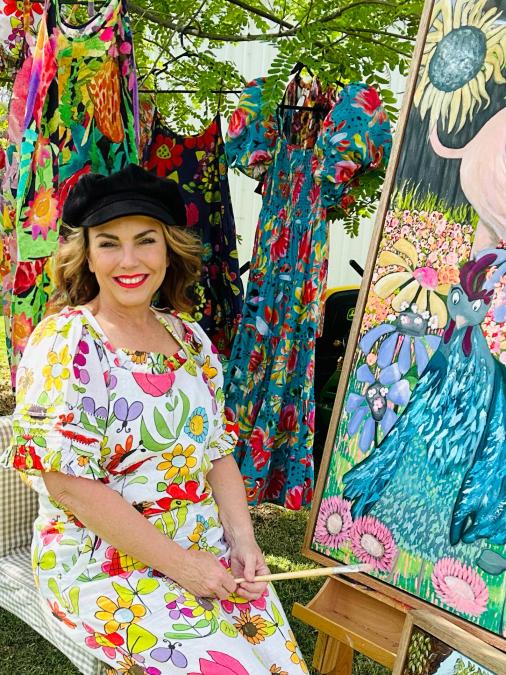
Statement pieces are what make wearable art memorable, but the line between intentional and costume-like is thinner at a gallery than almost anywhere else. The aim is to control where the attention lands and to make sure the outfit still works while you are standing, walking and talking.
Choosing one statement piece and keeping the rest neutral
Let one item carry the look. If your dress has a bold abstract print, keep your shoes, bag and jewellery simple. An all-black outfit with a single vivid scarf or painted blouse is a classic formula.
A statement piece tends to read as deliberate when everything around it is quiet and well-fitted. A practical test before you leave: cover the statement piece with your hand.
Styling across body types, genders and comfort needs
Statement dressing works for every body and every gender, but the tactics differ. A few patterns that hold up in practice:
- Scale to your frame: A large-scale print can overwhelm a petite frame and disappear on a taller one. If you love a bold print, choose a scale that lets the garment's shape still read.
- Place the statement where you want attention: A vivid top draws the eye up; a patterned trouser or skirt draws it down. Choose based on what you want to foreground, not on rules about what suits you.
- Gender-inclusive formulas: A tailored jacket over a plain tee, a silk shirt with wide-leg trousers, or a knit with a sculptural accessory all work across genders. The principle is the same: one focal point, clean lines elsewhere.
Accessories, stacked bangles and silk scarves
Accessories add personality without overwhelming the look. Stacked bangles add movement and colour to a plain outfit. A silk scarf can be tied at the neck, wrapped through a bag handle or worn in your hair.
At a gallery, accessories also have a practical job. Keep bags small enough to carry in front of you in a crowd, and avoid long dangling pieces that can swing into a plinth or a neighbouring guest.
Gallery Etiquette, What Not to Wear and Dressing on a Budget
Looking good matters, but so does respecting the space and the artists.
- Avoid overly noisy jewellery or very large bags that could bump into artwork or other guests.
- Skip strong perfume, since it can linger in small rooms and affect how others enjoy the work.
- Choose footwear that won't scuff polished floors or make loud clicks during quiet viewing moments.
- Keep clothing fitted enough to move through crowded spaces without knocking into displays.
Dressing well does not require a large budget. Reuse your favourite pieces by changing the accessories or the layer on top. Build your outfit around one wearable art piece you love, then pair it with basics you already own. A single statement dress can carry many different evenings with a new scarf or jacket each time.
Planning Your Next Gallery Night Outfit
Start by checking the invitation and the venue, then choose one statement piece and build neutral support around it. Add a layer for changing temperatures, pick comfortable shoes for long hours on hard floors, and finish with one or two thoughtful accessories. Keep the rules of gallery etiquette in mind and you will feel confident from the first glass to the last viewing.
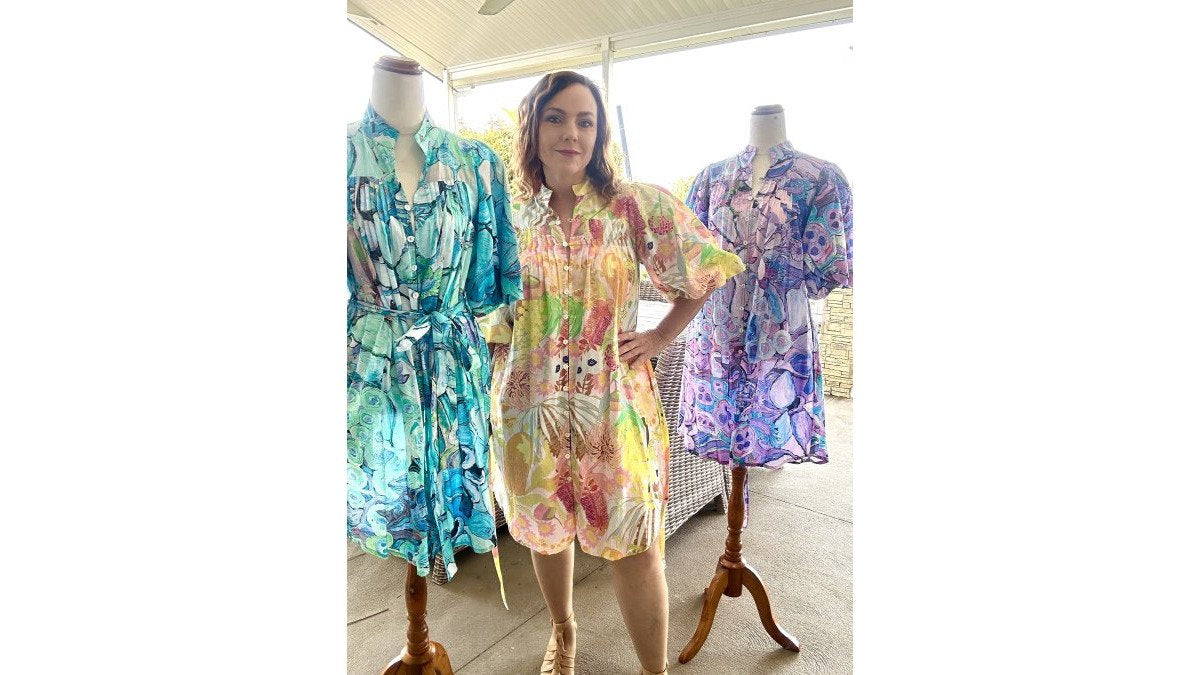
If you are looking for a piece that makes a statement without the stress, explore our Athena Linen dress in Summer Garden on Lavender, made from 100% linen and designed in Australia. For a bolder choice, the Lyla Linen in True Fuschia is a relaxed, floaty option. You can also add a finishing touch with our Pure Silk Scarf in Tweedle Dee Caramel, which ties in with the artwork on your outfit.


Frequently Asked Questions
Is there a dress code for an art gallery opening?
Most gallery openings have no formal dress code, and smart casual is the safe default. The invitation is the best guide: a printed black tie or cocktail note means dress up, while a simple 'drinks and art' line signals relaxed. Smart casual at a gallery usually means well-fitted separates, a considered dress or tailored trousers, and one piece that shows personal style. When in doubt, aim for polished but comfortable, since you will be standing and walking for much of the evening.
Can you wear jeans to an art gallery opening?
Yes, jeans are acceptable at many gallery openings, particularly in contemporary spaces or artist-run venues. Choose dark, well-fitted denim with no distressing and pair it with a silk blouse, a structured jacket or a statement knit to lift the look. At more formal openings, where guests are dressed up, jeans can look too casual, so check the invitation or ask the gallery when unsure.
What should I wear to an art gallery opening at night?
Evening gallery openings suit a midi or wrap dress, tailored trousers with a silk blouse, or an all-black outfit with one bold accessory. Layering helps because galleries can be warm when crowded and cool near air vents or large windows. A light blazer or wrap is practical, and a pair of comfortable heeled boots or loafers will carry you through a long evening on hard floors.
How formal should I dress for an art opening?
Aim for one step above everyday wear. A linen dress with a relaxed structure, or a tailored outfit with an artful print, reads as considered without feeling stiff. Wearable art pieces, such as the Athena Linen Dress in Summer Garden on Lavender (AUD $220.00), suit this setting because the printed design itself acts as the conversation starter. Keep the rest of the outfit simple so the print can carry the look.


Written by Kerry Munns