How to Recycle Old Clothes Without Sending Them to Landfill
Last Updated: November 5, 2026
Quick Summary
To recycle old clothes in Australia, first sort every item into wearable, repairable or unwearable, then send wearable pieces to charity or retailer take-back schemes and unwearable textiles to a textile recycler or council transfer station. Wash and fully dry everything before drop-off, and never place soft textiles in the kerbside bin.
- Sort clothing into three boxes: wearable, repairable and unwearable before deciding where it goes.
- Most households cannot put clothing in the kerbside bin because soft textiles tangle sorting machinery.
- Donate anything someone else could wear and recycle only what nobody could wear.
- Bag unwearable textiles separately, label them as rags and keep them clean and dry.
- Check the store's accepted items list before using an in-store retailer take-back scheme.
Table of Contents
- Sorting Your Wardrobe: Wearable, Repairable or Unwearable?
- Where to Recycle Clothes: A State-by-State Directory
- How to Recycle Damaged Clothes and Stained Textiles
- Donate or Recycle Clothes: Making the Right Call
- Clothing Take-Back Schemes and Retailer Programs
- Preparing and Packing Textiles for Collection
- What Happens to Your Clothes After Collection
- Choose Wearable Art That Stays Out of Landfill
- Frequently Asked Questions
Sorting Your Wardrobe: Wearable, Repairable or Unwearable?
Learning how to recycle old clothes in Australia starts with one honest sort, not a trip to the bin. Most textile waste ends up in landfill because people skip this step and toss everything into the same bag.
Sustainability Victoria's guidance on textile waste notes that clothing should be sorted by condition before you decide where it goes. That single habit keeps wearable items in circulation and sends only true waste to recovery.
The Three-Box Method
Set three boxes on the floor and sort every item into one:
- Wearable - clean, undamaged, still fits or suits someone else
- Repairable - missing a button, split seam, small stain, loose hem
- Unwearable - worn through, heavily stained, stretched or torn beyond repair
Be honest with box two. A repair you will never do belongs in box one or three, not on a chair for six months.
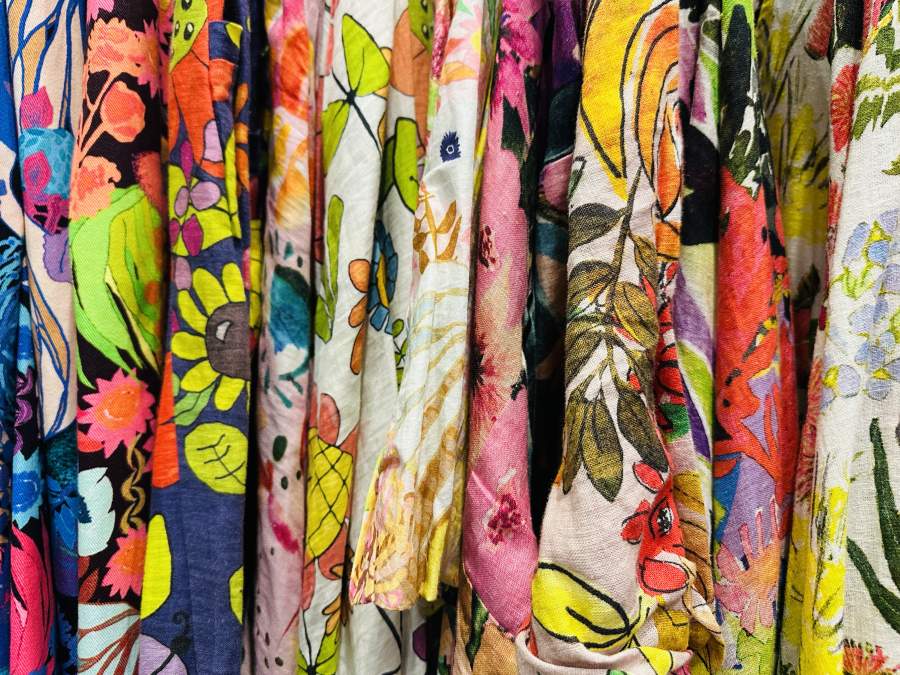
If you are ready to build a smaller, more intentional closet, our guide on how to build a capsule wardrobe with statement pieces walks you through it step by step.
Where to Recycle Clothes: A State-by-State Directory
Where you recycle depends on where you live, because kerbside rules, council drop-offs, charity networks and retailer take-back schemes differ by state and territory. Use this directory as a starting point, then confirm opening hours, accepted items and any fees directly with the service or council before you go.
| State or Territory | First stop | Also worth trying | What to confirm before you go |
|---|---|---|---|
| New South Wales | Your council's waste and recycling page for textile drop-off days and transfer stations | Charity op shops, in-store retailer collection boxes, mail-in textile services | Whether soft textiles are banned from kerbside bins in your council area and where the nearest permanent drop-off is |
| Victoria | Council recycling guide and transfer station listings | Op shops, textile recyclers, retailer take-back | Whether your council runs seasonal textile collection events and what condition it accepts |
| Queensland | Council waste facilities and resource recovery centres | Charity stores, mail-in services, community collection drives | Whether transfer stations charge a gate fee for bagged textiles and any weight limit per visit |
| Western Australia | Local council transfer stations | Op shops, retail collection points, charity bag collections | Whether the site accepts unwearable rags as well as wearable donations |
| South Australia | Council recycling depots | Charity shops, take-back programs, council hard-waste events | Whether textiles must be separated from general waste and how they should be bagged |
| Tasmania | Council waste services | Op shops, community collection drives, regional resource recovery centres | Whether rural and regional depots accept textiles year-round or only during events |
| ACT | ACT Government recycling and waste pages | Charity bins, retailer programs, tip and transfer station drop-offs | Which drop-off points accept shoes and bedding as well as clothing |
| Northern Territory | Local council offices | Community op shops, collection events, transfer stations | Whether wet-season conditions affect collection schedules and storage |
Council and Kerbside Options
Most households cannot put clothing in the kerbside bin. Soft textiles can tangle sorting machinery at recovery facilities, so many councils ask residents to keep them out and use a drop-off point instead.
Some councils run seasonal collection days for clothing and household textiles, often alongside hard-waste or e-waste events.
Watch out: a charity bag left on the verge in wet weather can be soaked before collection and rejected, so only use kerbside bag schemes when the forecast is dry and follow the collection window exactly.
How to Choose Between Routes
Use condition first, then location. Wearable items should go to a charity, op shop or retailer take-back scheme. Repairable items are better repaired or passed to a service that resells them. Unwearable textiles belong with a textile recycler, transfer station or retailer collection point that explicitly accepts rags.
If you are weighing up whether to repair or discard a well-made piece, our article on whether expensive clothes are more durable is a useful reality check. And if you want to know which labels are worth supporting with your wearable cast-offs, see our guide to sustainable fashion labels in Australia.
How to Recycle Damaged Clothes and Stained Textiles
Damaged clothing is not rubbish. Torn, stained and worn-out items can still become industrial rags, insulation or new fibre through textile recovery. The key is keeping them clean, dry and separate from your general waste.
Follow these steps:
- Wash and fully dry every item, even the unwearable ones
- Remove belts, buckles and hard trims where a service asks you to
- Bag unwearable textiles separately from wearable donations
Watch out: damp clothing in a sealed bag grows mould within days and can spoil an entire collection batch, so dry everything completely before packing.
Donate or Recycle Clothes: Making the Right Call
The general rule is simple: donate anything someone else could wear, and recycle what nobody could. Donation centres want clean, wearable clothing in current season and reasonable condition. Textile recyclers take the rest, but only if it is clean, dry and separated from general waste.
A Condition-and-Material Decision Tree
Work through these questions in order. Stop at the first one that gives you a clear answer.
- Is it wearable as it is? Clean, undamaged, fits someone, in season. If yes, donate it, resell it or give it to someone who will wear it.
- Is it repairable at reasonable cost? A missing button, split seam, loose hem or small stain is usually worth fixing. If the repair costs more than the garment is worth to you, move to the next question.
- Is it a single-material natural fibre? Pure cotton, linen, wool or silk is easier for textile recyclers to process into new fibre. Bag it separately and label it if the service asks.
- Is it a synthetic or a blend? Polyester, nylon, elastane and blended fabrics are harder to recycle into new clothing because the fibres are difficult to separate. Most go to lower-value uses such as wiping cloths, insulation or padding.
- Is it unwearable and contaminated? Heavily stained, mouldy, wet or mixed with general waste. This is the only category that should go to landfill, and only after you have checked whether your council accepts it at a transfer station.
Material-Specific Guidance
Different materials follow different routes, and treating them all the same is why so much ends up in the wrong stream.
- Natural fibres (cotton, linen, wool, silk): the best candidates for fibre recovery. Keep them clean and dry, and separate white from coloured where a service requests it.
- Synthetics (polyester, nylon, acrylic): recyclable in principle, but often downcycled into padding, insulation or industrial cloth rather than new garments.
- Blended fabrics (cotton-polyester, wool-elastane): the hardest stream. Most recyclers cannot separate the fibres economically, so expect lower-value outcomes or rejection.
Donation Versus Recycling: The Trade-Off
Donation keeps a garment in use, which is almost always the better environmental outcome.
Unique Recycled Denim Jacket →
A common pattern is that people over-donate unwearable items, believing the charity will sort it out.
Watch out: a bag that mixes wearable donations with stained rags can cause the whole bag to be treated as waste, so sort and label before you drop off.
If you are weighing up whether to repair or discard a well-made piece, our article on whether expensive clothes are more durable is a useful reality check.
Clothing Take-Back Schemes and Retailer Programs
Clothing take-back schemes let you hand old garments back where you shop. Many retailers now run in-store collection boxes for clothing, shoes and household textiles, regardless of brand or condition. You drop items in, and the retailer passes them to a textile recovery partner.
How to use them well:
- Check the store's accepted items list before you visit
- Keep items clean and bagged as instructed
- Ask where the textiles go, so you know it is genuine recovery
Take-back programs are growing because customers ask for them. If your favourite store does not offer one, ask. Retailers listen.
Preparing and Packing Textiles for Collection
Preparation makes or breaks a collection. A well-packed bag gets accepted; a soggy, mixed bag gets rejected or sent to landfill.
Use this checklist:
- Wash everything and dry it fully
- Sort wearable items from rags and unwearable textiles
- Check pockets for coins, keys and tissues
For mail-in services, follow the provider's packing guide and attach the postage label they supply. Keep the tracking number until collection is confirmed.
What Happens to Your Clothes After Collection
Collected textiles get sorted by hand and by machine. Wearable pieces go to charity retail or resale markets.
The Australian Government's National Waste Policy Action Plan sets out the national push toward a circular economy for textiles, which is why collection options keep expanding.
One honest caveat: recycling is the last resort, not the first. The most sustainable garment is the one you already own and keep wearing.
Choose Wearable Art That Stays Out of Landfill
The best way to reduce clothing waste is to buy pieces you will love for years, not seasons.
Our Unique Recycled Denim Jacket is a one-off piece made from recycled denim and our own fabric designs, crafted from 100% sustainable cotton and made in Australia.

When you choose slow fashion, you vote for a smaller landfill pile. Every piece you keep and wear is one less garment discarded.
Frequently Asked Questions
Can I put old clothes in my household recycling bin?
No. Standard kerbside recycling bins in Australia are for packaging and paper, not textiles. Clothes tangled in sorting machinery cause breakdowns and can injure workers. Some councils run separate textile collection trials or offer booked hard-waste pickups that accept bagged clothing. Check your local council website for what is accepted in your area before placing anything textile in the yellow bin.
What should I do with clothes that are torn, stained or missing buttons?
Assess whether a repair is realistic. A missing button or split seam is a quick fix. If the damage is beyond repair, cut the item into cleaning rags or take it to a textile recycler that accepts damaged clothing. Many charity bins reject torn items because they cost money to dispose of. When you recycle damaged clothes through a dedicated textile recovery service, the fibres can be shredded for insulation, padding or new yarn.
How do clothing take-back schemes work?
Retailers with clothing take-back schemes collect items in-store, often rewarding you with a discount voucher. The collected clothing is sorted: wearable pieces may go to charity partners or resale, while unwearable items are sent to textile recyclers for fibre recovery. Schemes vary by retailer, so check what they accept, whether shoes and bedding are included, and whether there is a limit per visit. Take-back schemes are one of the easiest ways to recycle old clothes without leaving your suburb.
Should I wash clothes before donating or recycling them?
Yes. Wash and dry everything before dropping it off. Clean clothing is easier for sorters to assess, reduces odour and mould in storage, and ensures wearable items can go straight to a new owner. Shoes should be brushed clean and paired together with laces tied. If an item is heavily soiled with paint, oil or chemicals, do not donate it; keep it out of the textile stream and dispose of it responsibly through your council's chemical or hard-waste service.
Your wardrobe holds more value than you think. Sort it with care, repair what you can, donate what is wearable, and recycle the rest through a proper textile recovery route. Ready to build a wardrobe you will never want to throw away? Explore our wearable art collection and choose a piece that lasts. Get started with Kerry Munns Artlife and wear art that stays out of landfill.


Written by Kerry Munns